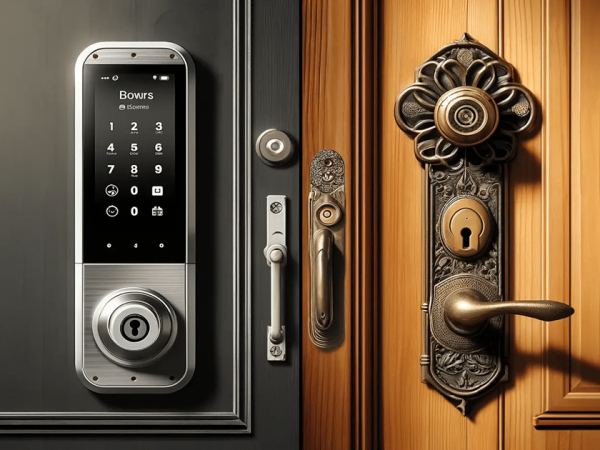
Not sure whether to choose smart locks vs traditional locks? You can see the key differences in the table below. For more details on securing your home, visit our Residential Locksmith Toronto page.
| Feature | Traditional Lock | Smart Lock |
| Security | Durable, mechanical, vulnerable to picking | Encrypted, keyless, but can be hacked |
| Access | Physical key only | Keyless, phone, code, fingerprint; temporary access possible |
| Installation | Easy, basic tools | Requires app, Wi-Fi/Bluetooth setup |
| Maintenance | Low, occasional lubrication | Battery changes, software updates |
| Cost | Low initial cost | Higher cost, offset by features |
| Best Use Case | Low-budget, low-traffic homes | Rentals, offices, high-traffic or multi-user locations |
What Are Traditional Locks?
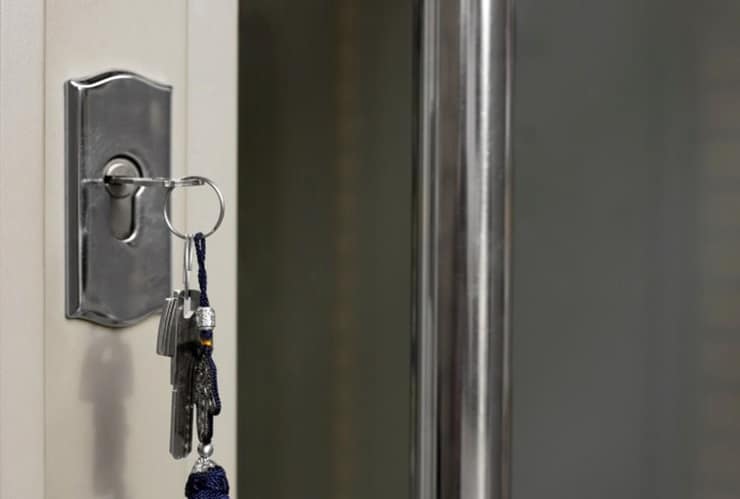
Traditional locks have been utilized across decades, including sequential security devices such as key locks, padlocks, and deadbolts. Traditional locks are entirely mechanical, so they can be locked and unlocked simply by the proper insertion of the specific key. The mechanical design of traditional locks makes them good for strong security, but vulnerable when compromised by unauthorized techniques like lockpicking and excessive key-making.
Benefits of Traditional Locks
- Simple and known design: Traditional locks have a known design with widespread acceptance and no training needed.
- No electrical power or batteries: Traditional locks are fully mechanical and will work in the case of a power outage.
- Lower initial cost: traditional lockout is significantly cheaper than smart lock alternatives, and generally inexpensive.
- Easier to physically install: Basic tools are all that is usually needed, and installation requires no software or wi-fi connectivity.
- Reliable: The absence of electronic parts significantly reduces technical complications.
Disadvantages of Traditional Locks
- Vulnerable to physical attack: Traditional locks can be easily picked or forcibly opened.
- No localized features: There is no ability to remote control, and multi-user capabilities are not achievable.
- More cost over time: Replacing locks or keys becomes frequent in high-traffic areas.
What Are Smart Locks?
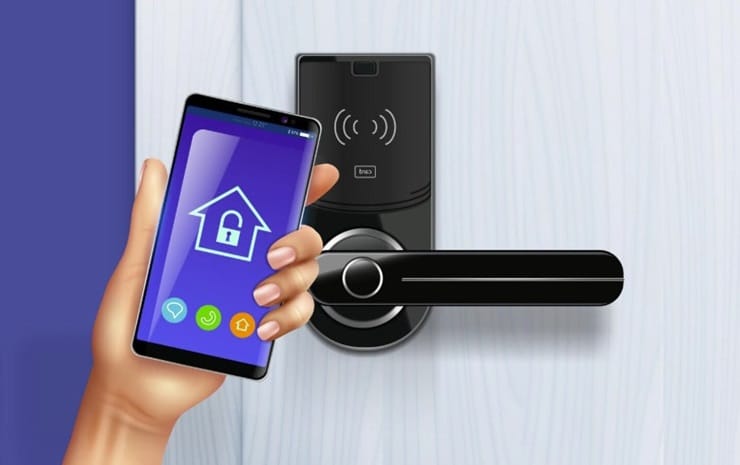
Smart locks, also known as electronic locks, are modern security locks that can be engaged with a PIN, fingerprint, or smartphone. Many of these locks communicate with your mobile device over Wi-Fi or Bluetooth. This allows you to have remote control, keyless entry, and activity reports. They also allow for temporary access for different people. For example, you could set a guest with a temporary code for access and then disable it after a week.
Smart Locks Benefits
- Keyless entry: Unlock with your phone, a password, a card, or a fingerprint. So, no lost keys!
- Remote control: Lock or unlock with an app. Helpful for deliveries or guests.
- Temporary access: You can give time-limited access for guests or short-term rentals.
- Entry/Exit logs: Know who enters or exits your home. This is useful for families or managers.
- Smart home ready: Can work with assistants like Google or Alexa, and can be linked to other security systems or be compatible.
- Tough: Can withstand the cold, the wet, or the snow. think Canadian winter
Disadvantages of Smart Locks
- Battery dependency: Most smart locks run on batteries and may lock out if drained, even with emergency options.
- High cost: Expensive compared to traditional locks, with extra installation and maintenance costs.
- Installation complexity: Requires app, Wi-Fi, or device integration, which can be hard for users with limited technical knowledge.
- Cyber risks: Vulnerable to hacking if passwords are weak or updates are ignored.
- Emergency issues: Outages, app crashes, or sensor problems can delay unlocking.
Smart Locks vs Traditional Locks: Key Differences
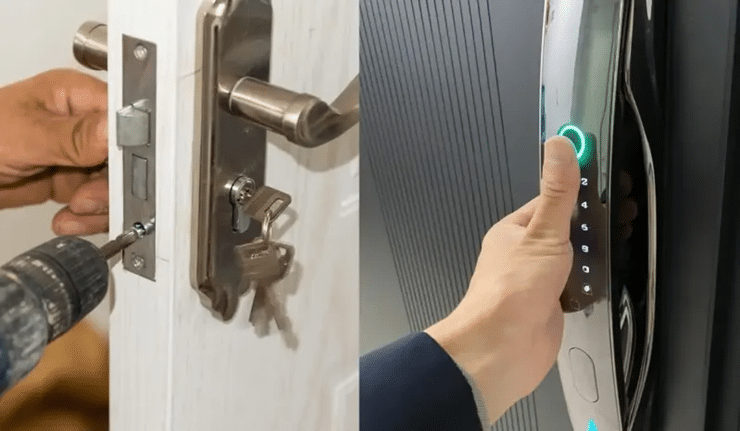
| Topic | Traditional Lock | Smart Lock |
| Security | Reliable but vulnerable to lock picking and key copying | Advanced encryption and authentication, but exposed to cyber attacks |
| Ease of Use | Requires a physical key | Unlocks with phone, code, or fingerprint |
| Access Control | Managed only with a key | Allows digital and temporary access for individuals |
| Installation | Simple with basic tools | Requires software setup and wireless connection |
| Maintenance | Low and simple maintenance | Needs battery replacement and software updates |
| Cost | Low initial cost | Higher cost but with more features |
Security
Traditional locks offer decent protection but remain vulnerable compared to smart locks. Smart locks use encryption and authentication, though internet connectivity brings hacking or software risks.
Ease of use
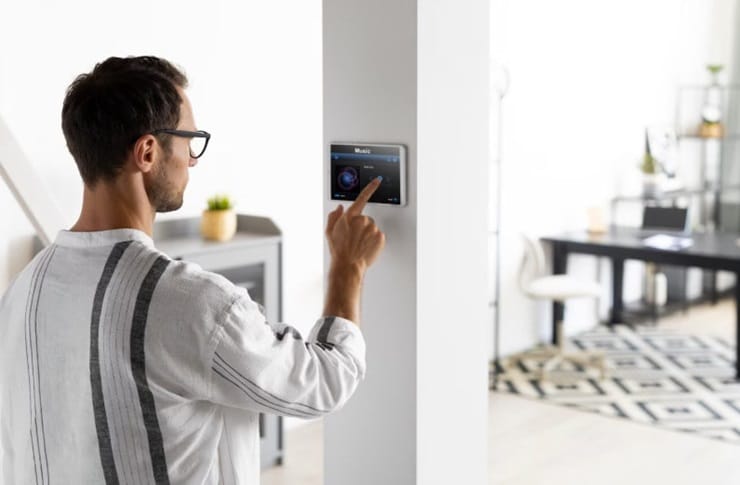
A traditional lock always requires a key and is a hassle if lost. A smart lock can be opened with a mobile phone, password, or fingerprint, and can even be controlled remotely.
Access control
In a traditional lock, the only way to control access is to copy or deliver the key, which is expensive and limited. A smart lock has the advantage that a separate password or temporary access can be defined for each person and then easily canceled.
Installation
Installing a traditional lock is very simple and can be done with basic tools. Smart locks typically require a Wi-Fi or Bluetooth connection and software configuration; however, since they are battery-powered, they often require no wiring and can be installed by home users.
Maintenance
A traditional lock works almost without maintenance, and usually needs lubrication or key replacement. Smart locks, however, require battery replacement and software updates to ensure they do not experience performance issues.
Cost
A traditional lock is inexpensive and has a low installation cost. But over the years, expenses such as replacing locks or making keys will accumulate. Smart locks are expensive and have a high installation cost, but the price difference can be offset with some access management features and alarms.
Secure Your Home or Office with Eastern Locksmith Today!
At Eastern Locksmith, we specialize in smart lock installations, traditional lock replacements, and comprehensive locksmith solutions to keep your home or office safe.
Which One Is More Secure?
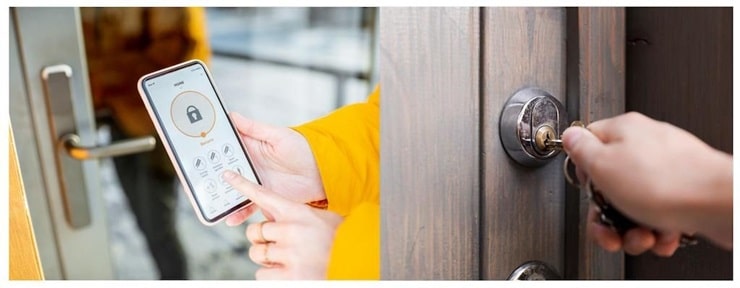
Some smart locks are equipped with tamper-detection sensors and real-time notifications to help enhance security. However, it is important to realize that no traditional lock or smart lock is completely secure against a burglar who is persistent.
If a traditional lock is constructed well (for example, security rated AAA) and is in good shape and installed correctly, then it could be very secure. Therefore, which lock is more secure depends on which threats are most likely where you are, and which additional security features each system has (Biometric Security, alarms, etc.).
Best Use Cases for Each
| Best Use Case | Traditional Lock | Smart Lock |
| Suitable for | Simple, low-budget places (villas, older homes, low-traffic buildings). Works without electricity or internet. | Rentals (Airbnb), small offices, or places needing temporary/multiple access. |
| User Type | Non-tech users, seniors, or anyone preferring simple systems. | Busy families, tech-savvy users, or those needing access logs. |
| Main Priority | Strength, durability, low cost, minimal maintenance. | Remote management, keyless entry, digital security, smart integration. |
| Applications | Rural/older homes, low-traffic areas. | Rentals, small offices, high-traffic locations. |
The Final Verdict: Which One Should You Choose?
So, when deciding between Smart Locks vs Traditional Locks, consider your priorities: smart locks provide convenience, remote access, and enhanced security, while traditional locks are simple, reliable, and cost-effective. Each type has its strengths depending on your home or office needs.
For businesses, our Commercial Locksmith Services offer professional support for installing, maintaining, or upgrading both smart and traditional lock systems. Choosing the right solution ensures safety, ease of use, and peace of mind for any property.
FAQ
-
Are smart locks really safe?
Smart locks are extremely secure, provided they utilize solid encryption and are installed correctly. There is some risk of hacking if they are not updated or have a weak password. Choosing a reputable brand and regularly updating it minimizes that risk.
-
Can I install a smart lock on any door?
Most smart locks utilize the deadbolt lock standard and will be easy to install on most doors. But older doors or specialty doors may require an adapter or a professional installer. Always check the product compatibility specifications of any product before you purchase.
-
What happens if the power or battery dies in a smart lock?
Most smart locks are battery-operated, and they usually warn you prior to running out of battery. If it does run out, it usually has a backup key or emergency power port (like a 9-volt) so you can still open the door.
-
Are traditional locks still effective?
Yes. High-quality traditional locks remain an effective and inexpensive option. Because they don’t rely on electricity or the internet, they are a simple and durable option for buyers who want simplicity and durability.
-
Can I use both a smart lock and a traditional lock together?
Yes, many people install both for added security. The smart lock offers convenience and remote access, while the traditional lock adds mechanical security. This combination makes for a more comfortable experience.
Which do you prefer? Traditional locks or smart locks? Share your experiences and opinions with us in the comments below!